super Probability in Casino Games
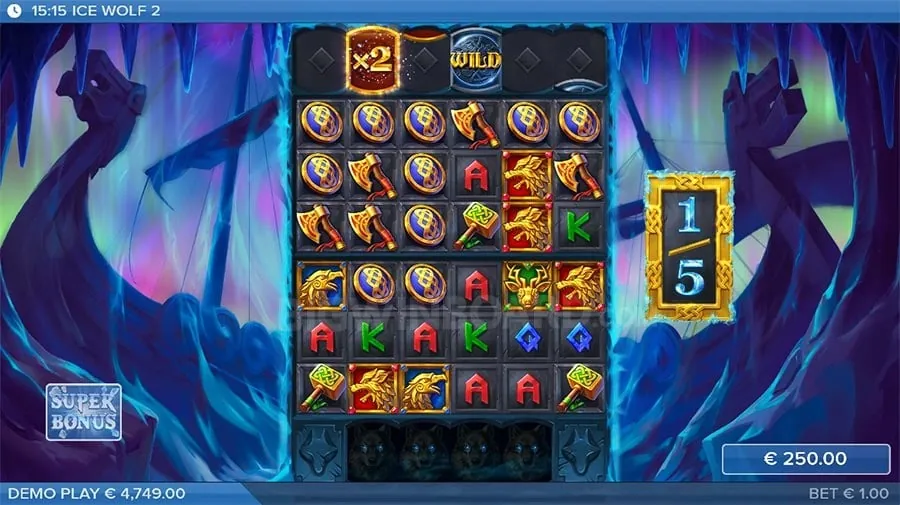
Unlocking super Probability in Casino Games: An Advanced Guide for Filipino Players
Welcome, seasoned players, to an in-depth exploration of probability in casino games. This advanced guide is designed for those who understand the basics and are ready to delve deeper into the mathematical underpinnings that govern every spin, deal, and roll. While luck undeniably plays a role, a sophisticated understanding of probability can significantly enhance your strategic approach, allowing you to make more informed decisions and potentially improve your long-term outcomes. We'll move beyond simple odds to uncover the nuances of variance, expected value, and how these concepts apply to popular casino offerings. For players in the Philippines market, grasping these principles is a super advantage in navigating the exciting world of online betting. Are you ready to elevate your game and transform your understanding of casino probabilities? Let's dive in.
For exclusive promotions and to apply these advanced strategies, register now and explore our wide range of games.
Table of Contents
- The Core Concepts: Beyond Basic Odds
- Advanced Strategies: Applying Probabilistic Thinking
- Game-Specific Applications: Blackjack, Roulette, and Slots
- Risk Management and Bankroll Preservation
- The Psychological Edge: Managing Bias and Variance
- Exclusive Promotion for Filipino Players
The Core Concepts: Beyond Basic Odds
Understanding probability in casino games goes far beyond knowing the odds of a single event. For advanced players, it's about grasping Expected Value (EV), Variance, and the Law of Large Numbers. EV is the average outcome of a bet over an infinite number of trials. A positive EV means you're expected to profit in the long run, while a negative EV indicates an expected loss. Most casino games have a negative EV for the player, representing the house edge. However, games like Blackjack, with optimal strategy, can sometimes offer a near-zero or even slightly positive EV under specific conditions (e.g., card counting).
Variance, on the other hand, measures the deviation from the expected outcome. High variance games (like slots or single-number roulette bets) can offer large payouts but with less frequent wins, leading to wild swings in your bankroll. Low variance games (like blackjack or even-money roulette bets) offer more frequent, smaller wins, leading to a smoother bankroll trajectory. The Law of Large Numbers dictates that as the number of trials increases, the actual results will converge towards the expected value. This is why the house always wins in the long run, but individual sessions can see players walk away with significant profits.
For a deeper dive into these mathematical concepts and how they apply to various games, explore our casino games.
Advanced Strategies: Applying Probabilistic Thinking
Advanced strategies are not about cheating the system but about optimizing your play based on a superior understanding of probabilities. This includes:
- Optimal Strategy Application: In games like Blackjack and Video Poker, there's a mathematically optimal way to play every hand. Deviating from this strategy increases the house edge. Mastering these strategies requires memorization and disciplined execution.
- Bankroll Management based on Variance: Tailoring your bet sizing to the variance of the game. In high-variance games, smaller bets relative to your total bankroll are crucial to withstand losing streaks. In low-variance games, you might be able to afford slightly larger bets.
- Identifying Positive EV Opportunities: This is rare but exists in specific scenarios, such as promotional offers with favorable terms or card counting in Blackjack. Always scrutinize promotions for their true EV.
- Understanding Conditional Probability: How the probability of an event changes based on prior events. This is fundamental in games like Blackjack where cards are removed from the deck.
Ready to put these strategies into practice? Sign up today and test your skills.
Game-Specific Applications: Blackjack, Roulette, and Slots
Blackjack: The Card Counter's Edge
Blackjack is perhaps the most famous example where probability can be leveraged. Card counting isn't about memorizing every card but about keeping a running count to determine when the deck is rich in high-value cards. This shifts the EV in the player's favor, albeit slightly. Advanced players understand the true count and adjust their bets accordingly. However, online casinos often use multiple decks and continuous shuffling machines, making traditional card counting highly ineffective. Nevertheless, mastering basic strategy remains paramount to minimize the house edge.
Roulette: Beyond Simple Bets
While roulette is largely a game of chance, advanced players understand the probabilities of different bet types. For instance, European roulette (single zero) offers better odds than American roulette (double zero) due to the reduced house edge. Strategies like the Martingale or Fibonacci are betting systems, not probability-altering strategies. They attempt to manage losses but do not change the fundamental negative EV of the game. True advanced play involves understanding the variance of different bets and managing your bankroll accordingly, rather than relying on progressive betting systems.
Slots: Understanding RTP and Volatility
Slots are pure games of chance, but advanced players look for games with higher Return to Player (RTP) percentages, which indicate how much of the wagered money is paid back to players over time. Volatility (or variance) is also key: high volatility slots offer larger, less frequent wins, while low volatility slots offer smaller, more frequent wins. Choosing slots that align with your bankroll and risk tolerance is a strategic decision. While you can't influence the outcome of a single spin, understanding these metrics helps in game selection and bankroll management.
Discover a wide array of games and apply your advanced knowledge. Play now!
Risk Management and Bankroll Preservation
For the advanced player, risk management is inextricably linked with probabilistic understanding. It's not just about winning, but about prolonging your play and minimizing losses. Key aspects include:
- Setting Loss Limits and Win Goals: Before playing, define how much you are willing to lose and what constitutes a satisfactory win. Adhering to these limits prevents chasing losses and safeguards profits.
- Optimal Bet Sizing: Never bet more than a small percentage of your total bankroll on a single outcome. This ensures you can withstand inevitable losing streaks dictated by variance.
- Understanding House Edge: Every game has a house edge, which is the casino's built-in advantage. Advanced players acknowledge this and factor it into their long-term expectations.
- Avoiding Tilt: Emotional betting (known as 'tilt') is the enemy of probabilistic play. Sticking to your strategy, even during losing streaks, is crucial.
Effective bankroll management is critical for a sustainable gaming experience. Learn more about responsible gaming.
The Psychological Edge: Managing Bias and Variance
Even with a solid grasp of probability, human psychology can be a player's biggest adversary. Cognitive biases often lead to irrational decisions:
- Gambler's Fallacy: